

DOCUMENTARY SHORT
ONE HOT DAY
Temperatures are rising, heat related deaths are increasing across the globe, and the international response appears to be too little too late to meet the 1.5° goal of the Paris Agreement by 2030.
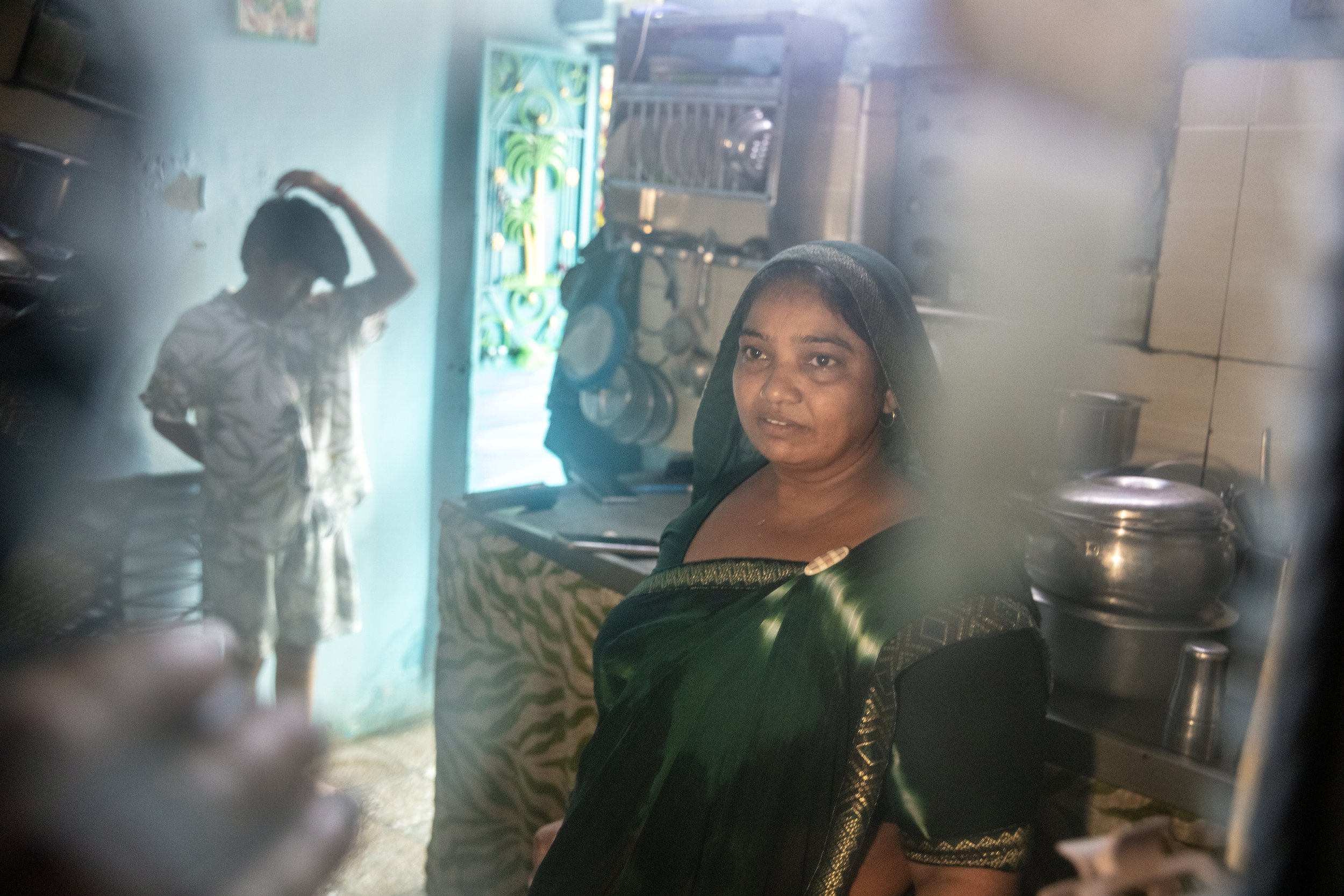
One Hot Day tells the story of three women laborers in India who face relentlessly hot conditions. They endure temperatures that reach 120°F/48°C, and their homes trap heat so their bodies never recover at night. This seamstress, farmer and vegetable seller are among 1,000 participants in the CommHATS study, a joint research project between Harvard University and the Self Employed Women’s Association (SEWA), a union with over 3.7 million members. They are all part of the informal Indian economy and they represent the most vulnerable population as temperatures rise.
The CommHATS project is the most extensive research ever conducted to understand the impact of heat on the human body. For 13 months, these women are equipped with a Fitbit to monitor they heart rates and activity levels, and microsensors in their homes and workplaces measure heat and humidity that reflects their actual experience at the ground level. Together, this information will be used to inform future actions to protect these workers from the worst impacts of heat, and to help shape policies at the local, national and global level.
This story was first published by Time magazine during Earth Week NYC. As Harvard’s Dr. Saatchit Balsari writes in our companion essay:
Merely counting deaths from heat risks missing its impact on human life. Each heat dome in the U.S. affected over 100 million people. Among them were construction workers, outdoor workers, delivery workers in unairconditioned cabs, farm workers, the unhoused, the poor who could not afford air conditioning, those on medications on whom the impact of heat was amplified, those with mental health disorders, and those with little or no access to healthcare.
According to the International Labor Organization, billions of workers around the world are exposed to extreme heat every year. While the vast majority of them do not die, many suffer deeply from the arduous ignominy of a life exposed to heat, day and night, year after year.
To read the full story in Time, click here.
View the film below.
Running Time: 20 Minutes
Release Date: September 19, 2026